





Salvage
Damaged or leaking dangerous goods need a calm, capable response. We recover cargo safely, contain the risk, and prepare the next step, whether that means repacking, transfer, or controlled onward handling.
When salvage becomes necessary
Salvage becomes necessary when dangerous goods are damaged, leaking, or otherwise no longer safe to leave in their current condition. At that point, the shipment is no longer just delayed. It has become a handling problem that needs to be contained before it can become a larger safety issue. Salvage creates a controlled way forward when the original packaging or setup has already failed in practice.
Containing risk around damaged or leaking cargo
The first priority in salvage is to contain the risk around the goods and prevent the situation from spreading. That means assessing what has gone wrong, stabilizing the immediate problem, and making sure the cargo can be handled without exposing people, nearby goods, or the wider operation to unnecessary danger. In these moments, a calm, capable response matters much more than speed on its own.
Using salvage packaging to regain control
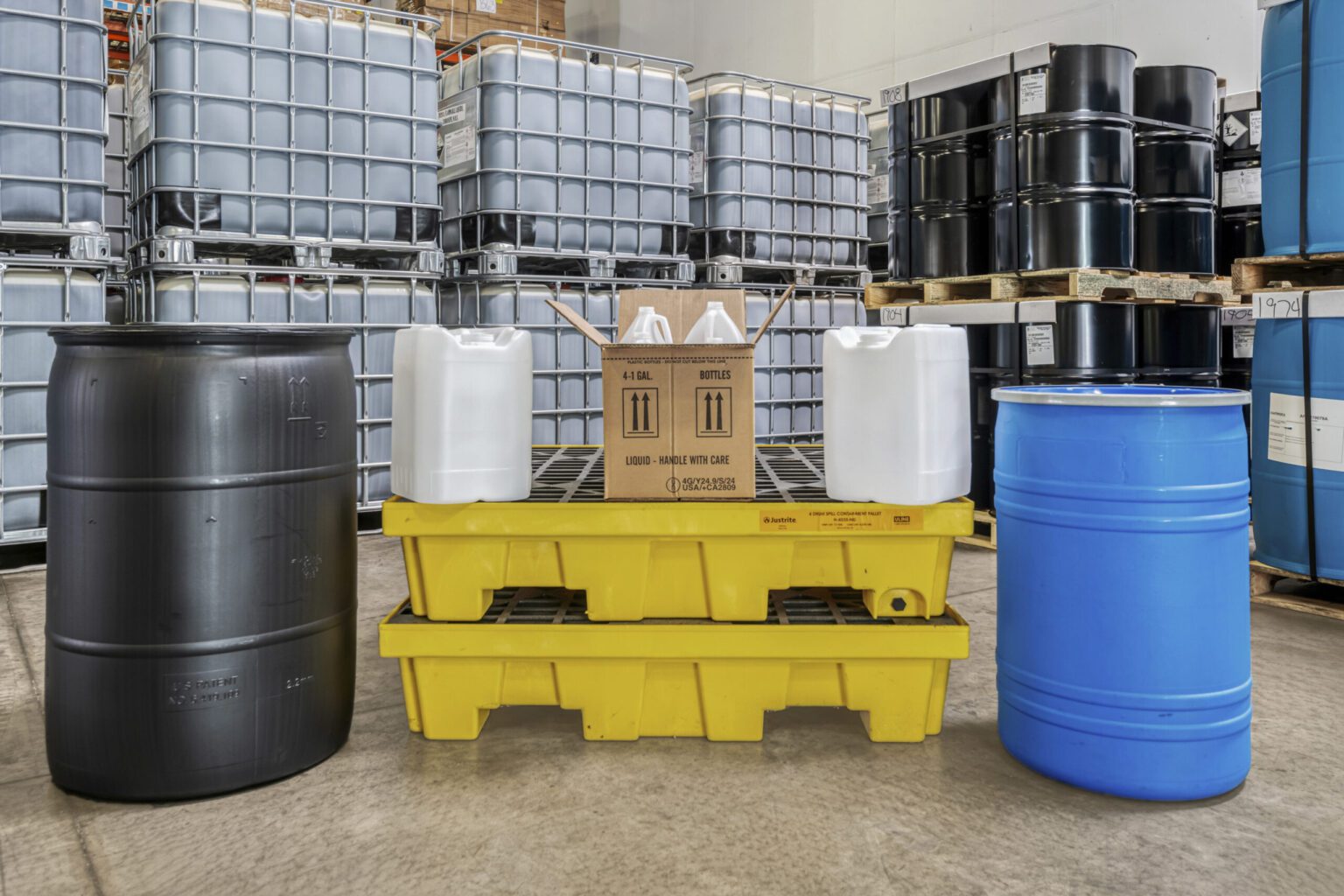
Salvage packaging helps regain control over cargo that cannot continue in its original packaging. A damaged jerry can, for example, may need to be placed inside a more secure outer package so it can be moved safely to a controlled location. That does not solve the entire problem by itself, but it creates a workable bridge between the incident and the corrective handling that has to happen next.
Moving cargo to a safer next step
Once the immediate risk is contained, the cargo still needs a safe next step. In many cases, that means moving it to one of our locations where the goods can be repacked, transferred, or otherwise corrected under the right conditions. Salvage is therefore not only about emergency response. It is also about opening a controlled route into recovery, so the shipment does not remain stuck in an unsafe or legally unworkable state.
What salvage support makes possible
Salvage support makes it possible to intervene when customers cannot legally or safely deal with the situation themselves. It turns a compromised shipment into something that can be contained, moved, and corrected without improvisation. That is especially valuable when the goods are leaking, the original package is no longer fit for transport, or the cargo is sitting in a place that is not permitted or equipped for direct corrective handling.
Every DG shipment poses unique challenges. We’re here to solve them.
From a single missing link to the entire chain: we determine what your shipment needs and handle those part of the process you’re looking to outsource. Practical, safe, and always in full compliance.
Why Special Cargo?
Salvage is one of those services where the difference between a specialist and a general operator becomes obvious very quickly. We know how to contain the problem first, use the right salvage packaging, and move the cargo into a safer recovery process. Because dangerous goods handling is our core business, we can step into difficult situations calmly and turn them into a controlled next step instead of a growing operational risk.
How we add value with DG salvage
Containment first: we focus on stabilizing the situation before anything else happens.
Controlled bridge: salvage packaging helps move damaged cargo safely toward corrective handling.
Recovery-ready approach: the service connects directly to repacking, transfer, or further recovery work.
Specialist intervention: we help where customers often cannot legally or safely act themselves.
Safer next step: the shipment is brought back under control instead of left in a failing state.